
How to Stop Your Dog from Jumping on People: A Simple Training Guide
Does your dog struggle with interactions? If your dog is constantly jumping, overly excited, or struggling to greet people politely, you are not alone. It can be frustrating when you want a calm greeting but instead get a bundle of chaotic energy.
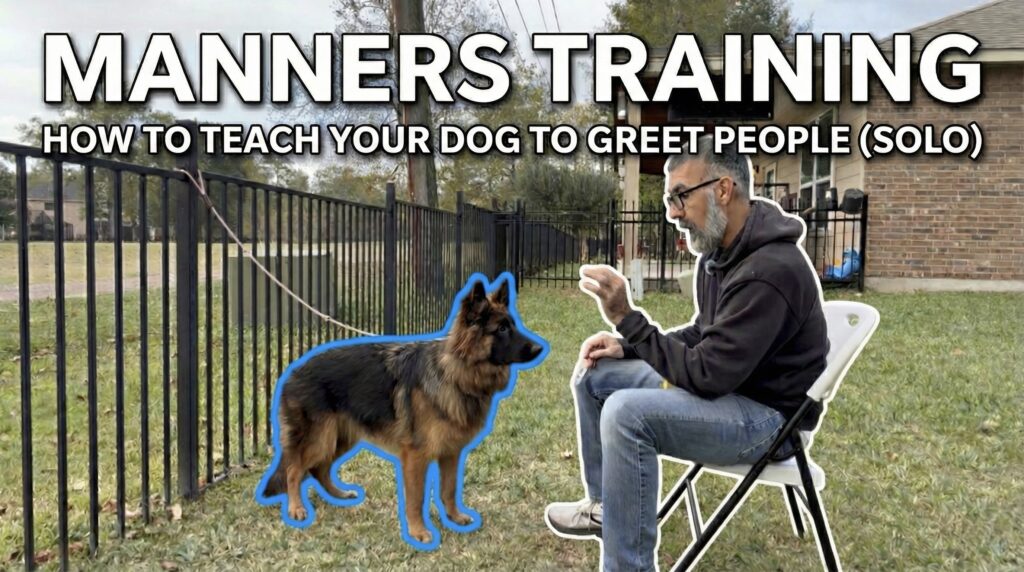
In this post, based on my latest video, I will walk you through a simple exercise you can do by yourself to help improve your dog’s interactions.
The Three Pillars of Control
Before diving into the exercise, it is important to remember the three main variables we can control in dog training:
The Environment: Where the training takes place.
The Dog: How we manage the dog physically (leashes, tethers).
The Reward: What motivates the dog (food, praise, toys).
When teaching something new, we want to manage these variables to make it as easy as possible for the dog to succeed.
Setting Up for Success
For this exercise, you don’t need a fancy facility. You can do this in your neighborhood or backyard. Here is the setup used in the video:
Treat Pouch: Fill it with food your dog likes. Remember, it is only a reward if the dog is willing to eat it.
The Back Tie: Tether your dog to a sturdy post using a slip leash approximately five feet long. This gives you control over the dog without needing to constantly hold the leash tight.
The Environment: You may not have 100% control here. In the video, there were distractions like golf carts and other dogs nearby. That is okay, as long as you control the reward and the dog, you can still train effectively.
The goal of the back tie is to set a physical boundary. If the dog gets too excited or jumps, they can’t reach you to practice that unwanted behavior.
The Training Process: Calmness = Reward
The core of this training is teaching your dog that calmness leads to good things, while excitement gets them nowhere.
1. Use Singular Treats (No Jackpots)
Avoid giving handfuls of treats (jackpots) for this specific exercise. Large rewards can spike excitement, and right now, we are trying to teach the dog how to interact calmly. Use one single piece of food at a time to keep arousal levels low.
2. Offer the Reward for Focus
Stand just outside the range of the leash. If your dog is distracted or pulling, wait. When they turn their attention to you and show calm behavior, offer the food. If they come forward calmly to take it, great!
3. The Feed and Pet Pattern
We want to teach the dog that human touch is a positive, calm experience, not a signal to wrestle or jump. We do this through two methods:
Feed then Pet: Give the dog a treat, then calmly stroke them. This uses classical conditioning to pair food with touch.
Pet then Feed: Touch the dog gently, then immediately give them a treat. This teaches them that “touch predicts food.
Important: Keep your own energy calm. Many people approach dogs with high energy and excited voices, which triggers the dog to ramp up. Stay quiet and relaxed.
4. What to Do If They Get Excited
If you reach out to pet your dog and they “lose their mind” (start jumping or mouthing), stop immediately.
Take your hand away.
Do not give the treat.
Step back out of range and wait for them to settle down again.
Do not give commands or yell; let the leash do the work.
Wait for them to return to a calm state before trying again.
Summary
If you are struggling with a jumpy dog, try this back-tie method. It allows the dog to figure out the rules without you needing to correct them constantly.
Don’t shorten the leash: Let the tether limit their movement so they learn to self-regulate.
Don’t over-command: Stay quiet and let the dog think.
Reward the calm: Only feed and pet when the dog is attentive, and four paws are on the floor.
By consistently rewarding calm behavior, your dog will learn that the best way to interact with you—and others—is to keep their cool.